Thursday, September 2, 2021
The Incomprehensible Trinity Doctrine
Wednesday, September 1, 2021
Dr. Robert M. Price on John 1:1 in the New World Translation
Listen at https://www.youtube.com/watch?v=ajr47vK0nxc
Sunday, August 29, 2021
Thinker and Heretic John Locke on This Day in History
Locke was the Father of Classical Liberalism (Libertarianism). He stated that each person has a property in himself, and property precedes government. Unlike Descartes, Locke thought the mind was a blank slate (tabula rasa). The earth is given to humans in common. Locke’s doctrine that governments need the consent of the governed is central to the Declaration of Independence. He advocated separation of powers and believed that revolution was not only a right but an obligation at times.
John Locke wrote his major works in his 60's, and never really found time for a wife or romance. He did have an interesting feud with Isaac Newton. Newton would send strange, paranoid letters accusing Locke of trying to “entangle [him] with women.”
See also Over 320 Books on DVDrom on Thinkers and Philosophy
Thursday, August 19, 2021
The Holy Spirit not the 3rd Person of the Trinity
From The History of the Doctrine of the Trinity in the Christian Church by Hugh Hutton Stannus
As God, our Heavenly Father, is THE INFINITE SPIRIT who fills all space and time, we are inclined to think it must be an exceedingly difficult task to find in the Bible proofs of another Infinite Spirit, “the third person in the Trinity”. It may have been some such thought as this which led Jeremy Taylor (“Works”, xiii. 143) to say, “That the Holy Ghost is God, is nowhere said in Scripture. That the Holy Ghost is to be invocated, is nowhere commanded; nor any example of its being done recorded”. There is nothing more evident, in the writings of what are called the ante-Nicene fathers, than the fact that Irenæus, Origen, Tertullian, Athenagoras, &c. &c., never thought of the Holy Ghost as equal to the Father. In the New Testament the Holy Spirit is spoken of as sent by the Father, as the gift of the Father-that is, subordinate to the Father. So, too, the Son is repeatedly spoken of as subordinate to the Father, and as deriving all his power and authority from the Father. Trinitarians say, indeed, that these texts refer only to the Son's human nature, and not to his supposed Divine one. But, in the case of the Holy Spirit, no such evasion can be resorted to. Moreover, if the Three Persons of the Trinity be co-equal, is it not very strange that there should be passages so strong, and so numerous, in assertion of the inferiority and subjection of the Son and Spirit to the Father, and yet that there is not one passage in the whole Bible that speaks of any inferiority or subjection, real or apparent, of the Father to the Son or the Spirit? We are bound again to repeat that all the weight of Bible evidence is against the hypothesis of a second infinite spirit, equal to “the God and Father of all flesh”.
The doctrine of a Triune Deity which affirms the Holy Spirit to be a third person in the Godhead, is altogether one of inference; and it involves the mind in the most complete confusion, making more than one, eternal omnipotent, omnipresent God. "God is a Spirit", the Holy Spirit, and it is unscripturas to say that there is more than One Infinite Spirit. In the following passages the words “Spirit” and “Holy Ghost ” are used for God himself.
“For what man knoweth the things of a man, save the spirit of man which is in him” (i.e. except the man himself), “even so the things of God knoweth no man, but the Spirit of God”, (i.e. but God himself.)—1 Cor. ii. 11.
Why hath Satan filled thy heart to lie to the Holy Ghost?......Thou hast not lied unto man but unto God”.—Acts v. 3, 4.
"Know ye not that ye are the temple of God, and that the Spirit of God dwelleth in you”.—1 Cor. iii. 16.
"By his Spirit he hath garnished the heavens”, (i.e. God made the heavens.)- Job xxvi. 13.
"The Spirit of God hath made me”, (i.e. God me.) Job xxxiii. 4.
Christ said, “I cast out devils by the spirit of God”. Matt. xii. 28. These were miracles, we learn, which God did by him.
“Whither shall I go from thy Spirit, or whither shall I flee: from thy presence", (i.e. from thyself.)-Ps. cxxxix. 7.
"My Spirit shall not always strive with man”, (i.e. I will not always strive with man.)-Gen. vi. 3.
“Holy men of God spake as they were moved by the Holy Ghost”, (i.e. by God.)—2 Pet. i. 21.
In reading the Scriptures we find that all these works ascribed to the Spirit are also said to be done by the Power, Understanding, Word, Hand, Finger and Breath of God; can any person seriously believe these to be distinct personalities in the Godhead? Do they not simply mean God himself?
We also perceive that in the Bible, “the Spirit of God” frequently signifies holy influence, strength, comfort, truth, miraculous power, etc., etc., which God is said to send, give, pour out, shed forth, baptize with, and anoint with. The following passages clearly sustain this view:
“Thou gavest also thy Good Spirit to instruct them”.Neh. ix. 20.
“I will pour out My Spirit upon all flesh; and your sons and your daughters shall prophesy, your old men shall dream dreams, your young men shall see visions”.-Joel ii. 28.
“And the spirit of the Lord shall rest upon him, the Spirit of wisdom and understanding, the Spirit of knowledge and the fear of the Lord".- Isa. xi. 2.
“Would God that all Jehovah's people were prophets, and that Jehovah would put his Spirit upon them”, (i.e. give them wisdom of speech.)-Numb. xi. 29.
“And the Spirit of the Lord came mightily upon him (Samson) and he rent the lion as he would a kid”, (i.e. God gave him strength.)—Judges xiv. 6.
“The Spirit of the Lord came upon Gideon, and he blew a trumpet; and Abiezer was gathered after him”.-- Judges vi. 34.
“The Spirit of the Lord is upon me, because he hath anointed me to preach the gospel to the poor; and hath sent me to heal the broken hearted, to preach deliverance to the captives, and the recovering of sight to the blind, to set at liberty them that are bruised".—Luke iv. 18.
“He whom God hath sent speaketh the words of God; for God giveth not the Spirit by measure unto him”.- Jn. iii. 34.
“God anointed Jesus of Nazareth with the Holy Spirit and with Power". -Acts x. 38.
"If ye then, being evil, know how to give good gifts unto your children, how much more shall your heavenly Father give the Holy Spirit to them that ask him”.—Luke xi. 13.
"Now we have received, not the Spirit of the world, but the Spirit which is of God; that we might know the things that are freely given to us of God”. -1 Cor. ii. 12.
“I will pray the Father, and he shall give you another Comforter, that he may abide with you for ever, even the Spirit of Truth”.- John xiv. 16, 17.
“When the Comforter is come, whom I will send unto you from the Father, even the Spirit of Truth which proceedeth from the Father".--John xv. 26.
“Howbeit, when he, the Spirit of Truth, is come, he will guide you into all truth": -John xvi. 13.
No one need wonder that the influence of the Holy Spirit is spoken of occasionally as a person, when they know that Sin, Death, Wisdom, and Charity, though inanimate things and qualities, are often so spoken of.
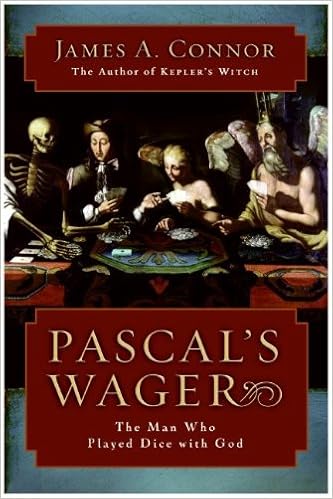
Blaise Pascal (and his wager) on This Day in History
Wednesday, August 18, 2021
How to translate John 1:1 θεόν & θεὸς: The Trinity Yay or Nay?
How to translate John 1:1 QEON (Theon) & QEOS (Theos): The Trinity Yay or Nay?
See also: 206 Alternative Translations of John 1:1c
Bible Translations & Versions for Unitarians
John 1:1, Exodus 7:1 and the Indefinite Article
Getting it Wrong Again on John 1:1
Getting it Wrong Again on John 1:1c
Saturday, August 7, 2021
The Missing holy spirit in the New Testament Letters
See a local listing for it here
Take a look at the opening verses of the epistles in the New Testament and see if you can take note of what is missing:
"Paul, a servant of Christ Jesus, called to be an apostle and set apart for the gospel of God" Romans 1:1
"Paul, called to be an apostle of Christ Jesus by the will of God,... Grace and peace to you from God our Father and the Lord Jesus Christ." 1 Corinthians 1:1-3
"Paul, an apostle of Christ Jesus by the will of God,... Grace and peace to you from God our Father and the Lord Jesus Christ." 2 Corinthians 1:1-3
"Paul, an apostle--sent not from men nor by man, but by Jesus Christ and God the Father...Grace and peace to you from God our Father and the Lord Jesus Christ" Galatians 1:1-3
"Paul, an apostle of Christ Jesus through the will of God, to the saints that are at Ephesus, and the faithful in Christ Jesus: Grace to you and peace from God our Father and the Lord Jesus Christ." Ephesians 1:1-1
"Grace and peace to you from God our Father and the Lord Jesus Christ." Php 1:2
"Paul, an apostle of Christ Jesus by the will of God, and Timothy our brother,...We always thank God, the Father of our Lord Jesus Christ, when we pray for you" Col 1:1-3
"To the church of the Thessalonians in God the Father and the Lord Jesus Christ" 1 Thess 1:1
"To the church of the Thessalonians in God our Father and the Lord Jesus Christ...Grace and peace to you from God the Father and the Lord Jesus Christ." 2 Thess 1:1,2
"Paul, an apostle of Christ Jesus by the command of God our Savior and of Christ Jesus our hope,...Grace, mercy and peace from God the Father and Christ Jesus our Lord." 1 Tim 1:1,2
"Grace, mercy and peace from God the Father and Christ Jesus our Lord." 2 Tim 1:2
"Paul, a servant of God and an apostle of Jesus Christ...Grace and peace from God the Father and Christ Jesus our Savior." Titus 1:1-4
"Grace to you and peace from God our Father and the Lord Jesus Christ." Phm 1:3
"In the past God spoke to our forefathers through the prophets at many times and in various ways, but in these last days he has spoken to us by his Son..." Heb 1:1
"James, a servant of God and of the Lord Jesus Christ" James 1:1
"Praise be to the God and Father of our Lord Jesus Christ!" 1 Pet 1:3
"our fellowship is with the Father and with his Son, Jesus Christ." 1 John 1:3
"Grace, mercy and peace from God the Father and from Jesus Christ, the Father's Son, will be with us in truth and love." 2 John 1:3
Why is there no mention of the holy spirit? If the holy spirit is such an integral part of the Godhead, why is the spirit never present to send greetings as well? It is almost as if these writers were unaware of a triune deity. If the writers were unaware of the holy spirit as being part of the body and community of God, then it is quite evident that the trinity doctrine was not a belief in the early church.
"In the eternal city of Revelation 21 and 22, both God and Jesus are presented as a featured fantasy. Each is pictured as sitting on his throne (Revelation 22:1). If 'the Holy Spirit' is a 'coeternal' member of a triune deity, why does it have no seat of authority on the final throne? This is consistent with the New Testament belief that there is one God, 'the Father,' and one 'Lord, Jesus Christ.' There is no such separate person known as 'the Holy Spirit.' In point of fact, the notion of the Holy Spirit never appears in the Book of Revelation." Gerald Segal